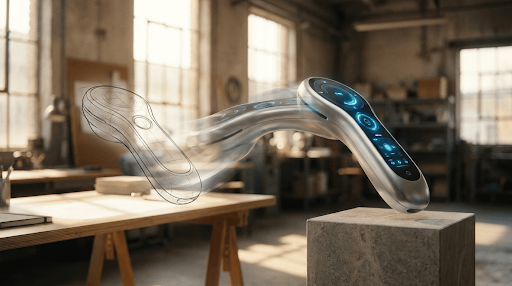
The field of generative artificial intelligence has moved beyond simple experimentation. For professionals in design, marketing, and filmmaking, the primary challenge is no longer just “generating an image.” The real struggle lies in the distance between a specific creative concept and a commercially viable final output.
Traditional AI tools often require hours of prompt engineering and post-production editing to achieve a usable result. This friction slows down workflows and increases costs for creative agencies. Platforms like higgsfield are changing this dynamic by unifying high-end models into a single, cohesive ecosystem.
By integrating advanced models such as GPT Image 2, higgsfield allows creators to produce pixel-perfect text and photorealistic 4K imagery without the typical artifacts found in legacy systems. This article explores how this evolution in technology is closing the gap between the initial idea and the finished product.
Most AI generators operate as standalone tools with a single underlying model. If a user needs a specific aesthetic, they often have to switch platforms entirely. This fragmentation creates a massive technical hurdle for professional workflows.
Higgsfield solves this by offering a “studio” approach. It brings together the industry’s most capable models under one roof. This allows a designer to choose the specific “engine” that best suits their project goals without leaving the environment.
The platform includes several specialized models:
By having these options in one place, the gap between concept and output is shortened. You no longer need to compromise on the model’s strengths. You simply select the tool that matches the vision.
A major pain point in early AI generation was the lack of control over specific details. If a creative brief required a specific word on a product label, the AI would often produce “gibberish” text. This necessitated heavy manual work in Photoshop.
The introduction of GPT Image 2 marks a significant turning point in this area. It focuses on several key professional requirements that were previously difficult to achieve:
While standalone competitors might excel in one of these areas, the integration of GPT Image 2 within a professional studio environment ensures that all these features work in harmony. This reliability is what allows a concept to move to “final” status in a fraction of the time.
The modern creative landscape is increasingly moving toward video. One of the unique value propositions of the higgsfield platform is the seamless transition from a static image to a high-quality video.
In a standard workflow, a designer would create an image in one tool and then use a separate video AI to animate it. This often results in a loss of quality or a shift in the visual style. Within this professional studio, the path is direct.
Once an image is generated using GPT Image 2, it can be immediately ported into the video generation layer. This maintains the visual DNA of the original concept. It ensures that the lighting, textures, and characters remain identical in the moving version.
According to research on Generative AI, the ability to maintain temporal consistency is one of the most difficult technical feats. By streamlining this image-to-video path, the platform allows for rapid storyboarding and the creation of commercial-grade social media content.
Where does this technology provide the most value? There are several scenarios where a unified, high-accuracy approach is the clear winner for professional teams.
Marketing agencies need to produce high volumes of content that stay “on-brand.” Using GPT Image 2 for posters and packaging ensures that brand names are spelled correctly and logos are placed accurately. This removes the “uncanny valley” effect that often plagues AI-generated marketing materials.
Filmmakers and directors use these tools to visualize scenes before a single camera is turned on. The ability to generate 4K photorealistic frames means these boards can be shown to clients as a near-final representation of the film’s look.
For industrial designers, the ability to see a product in various materials and lighting conditions is invaluable. The precision of GPT Image 2 allows for “virtual prototyping,” which can save thousands of dollars in physical modeling costs.
Every tool has its strengths and its areas for growth. To maintain a professional and unbiased view, it is important to look at the architecture of modern AI platforms like higgsfield.
Despite these considerations, the modern architecture of the platform positions it as a leader for those who prioritize quality over simple novelty.
The efficiency of a creative department is measured by how quickly it can iterate. In the past, every “revision” meant starting from scratch or spending hours in post-production.
With GPT Image 2, the level of prompt adherence is so high that revisions are often handled within the initial generation phase. If a client wants “more natural lighting” or “different text on the box,” the model understands these nuances.
This precision is what actually “shortens the gap.” It is not just about the speed of the GPU; it is about the accuracy of the output. When the AI delivers what the creator intended on the first or second try, the entire production cycle collapses from days into minutes.
The era of “fun but flawed” AI art is coming to an end. Professionals now require tools that can stand up to the scrutiny of a creative director or a corporate client.
Higgsfield has successfully built an ecosystem that prioritizes this professional standard. By hosting top-tier models like GPT Image 2, the platform provides a level of control that was previously impossible.
The verdict is clear: if your goal is to move from a concept to a final, commercial-grade output with minimal friction, a unified studio approach is the superior choice. The ability to handle text, maintain character consistency, and bridge the gap into video makes this the most robust solution currently available in the AI image generation space.
As the technology continues to evolve, the gap between what we can imagine and what we can create will only continue to shrink. For those ready to embrace high-fidelity, professional AI, the tools are finally ready.
